

Key Takeaways:
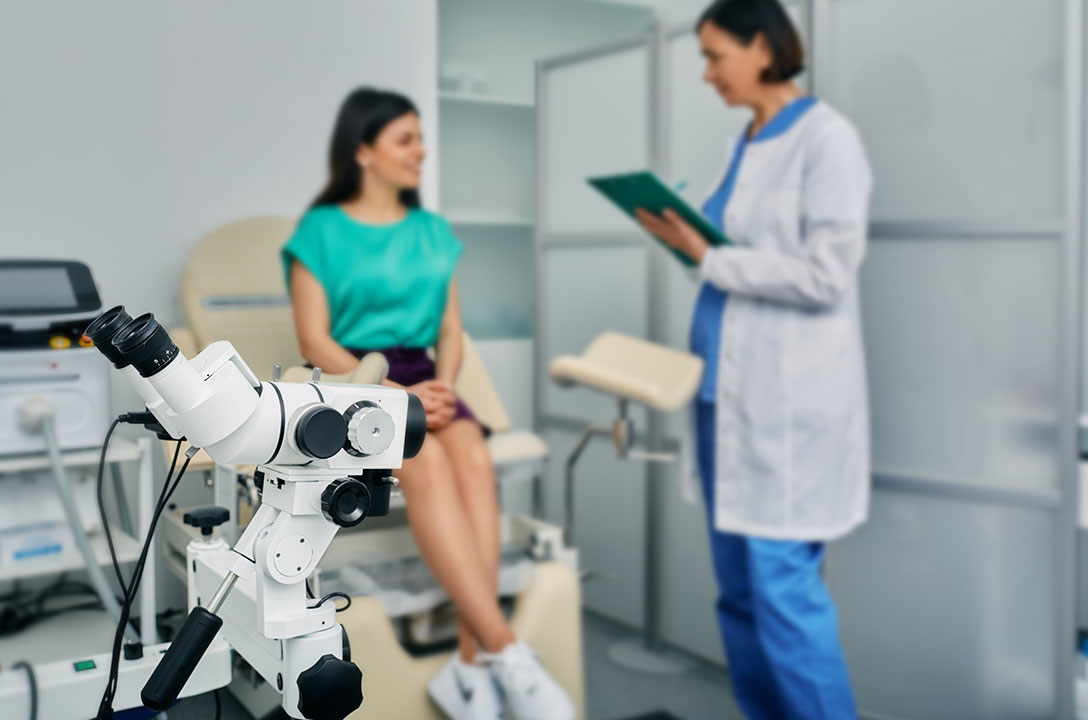
- A colposcopy (pronounced ‘kol-pos-kuh-pee’) is an office procedure using a microscope-like instrument, a colposcope, to evaluate the cervix for abnormal cells.
- If your self-collected screening results are abnormal or positive for high-risk HPV (human papillomavirus), your doctor may recommend that you have further testing, such as a colposcopy.
- A colposcopy allows the provider to have a better, closer view of the cervix and potentially take small samples, called biopsies.
- The procedure will look and feel similar to a Pap smear, although this time, your doctor will use a magnifying lens to look for abnormal cells on your cervix.
What is a colposcopy?
A colposcopy (pronounced ‘kol-pos-kuh-pee’) is an office procedure using a microscope-like instrument, a colposcope, to evaluate the cervix for abnormal cells.
Why do I need a colposcopy?
If your self-collected screening results are abnormal or positive for high-risk HPV (human papillomavirus), your doctor may recommend that you have further testing, such as a colposcopy. A colposcopy allows the provider to have a better, closer view of the cervix and potentially take small samples, called biopsies.
Teal Health follows the most up-to-date medical guidelines on how to manage your follow-up care if you receive abnormal results after your self-collection. Teal medical providers will refer you for a colposcopy if your sample tested positive for HPV types 16 and/or 18, as these HPV types are most commonly associated with causing cervical cancer over time if they are left unaddressed.
How do I prepare for a colposcopy?
No preparation is necessary to have a colposcopy, but the provider conducting your colposcopy may offer some guidance or specific recommendations.
For example, it is helpful to not be on your menses (period), or at least to not be bleeding heavily, at the time of your appointment to allow a clear view of the cervix. Your provider may also ask that you do not use tampons, vaginal products, or douches, and avoid vaginal intercourse for a day or two before your colposcopy. This also helps the provider get a clear view of the cervix and make sure any samples taken can be processed. Some women also find it helpful to take a pain reliever before their appointment, but this is not required.
If you are feeling nervous, you can plan to bring someone with you to the appointment. This may also be helpful after the appointment, so you have someone to help you get home.
What to expect during a colposcopy?
The procedure will look and feel similar to a Pap smear, although this time, your doctor will use a magnifying lens to look for abnormal cells on your cervix. You may feel a little cramping or discomfort during the procedure.
Your doctor will soak the area with a dilute acetic acid solution using cotton swabs, which turns abnormal cells white. If abnormal areas are identified, your doctor may take one or more small samples of tissue (biopsies) for testing. These cells will then be sent to a lab for analysis. It can take a week or two for the results to come back.
After the biopsies are taken, medicine is often applied to the cervix to stop any bleeding. It is normal to have some spotting or discharge for a few days after this procedure.
What does a colposcopy result show?
If you had samples taken from your cervix, these results will help determine if you have any abnormalities and classify any changes observed in your cervix by severity. The report may describe normal cervical tissue or various degrees of precancerous changes, also called cervical dysplasia. Very rarely, the biopsy could show cervical cancer.
Abnormal cervical cell changes are classified as low- (LSIL) or high-grade (HSIL), and can be assigned a Cervical Intraepithelial Neoplasia (CIN) grade.
- Low-grade or CIN1 are considered mild cell changes that usually resolve on their own, but still require surveillance to make sure they do not progress.
- CIN2 and CIN3 are both high-grade and are considered moderate to severe precancerous changes. These require closer monitoring and, at times, preventive interventions to ensure they do not progress into cervical cancer.
Depending on the result, you may need an additional procedure to remove the abnormal cells or more frequent Pap smear/HPV testing to monitor for changes. Your healthcare provider will review the results with you and discuss any follow-up recommendations.


Related articles


Skip the stirrups
To get early access, enter your email below.
$99 with insurance
$249 without insurance (reduced from $499)


