The key ingredient to women’s health innovation is directly asking women what they want, listening, and designing for their needs.
About what their healthcare experiences feel like today, and how they want things to change in the future. They told us about the healthcare priorities currently on their minds, their pain points, the ways they are coping in today’s landscape, and what changes need to be made for healthcare to meet women where they are.
Key Takeaways
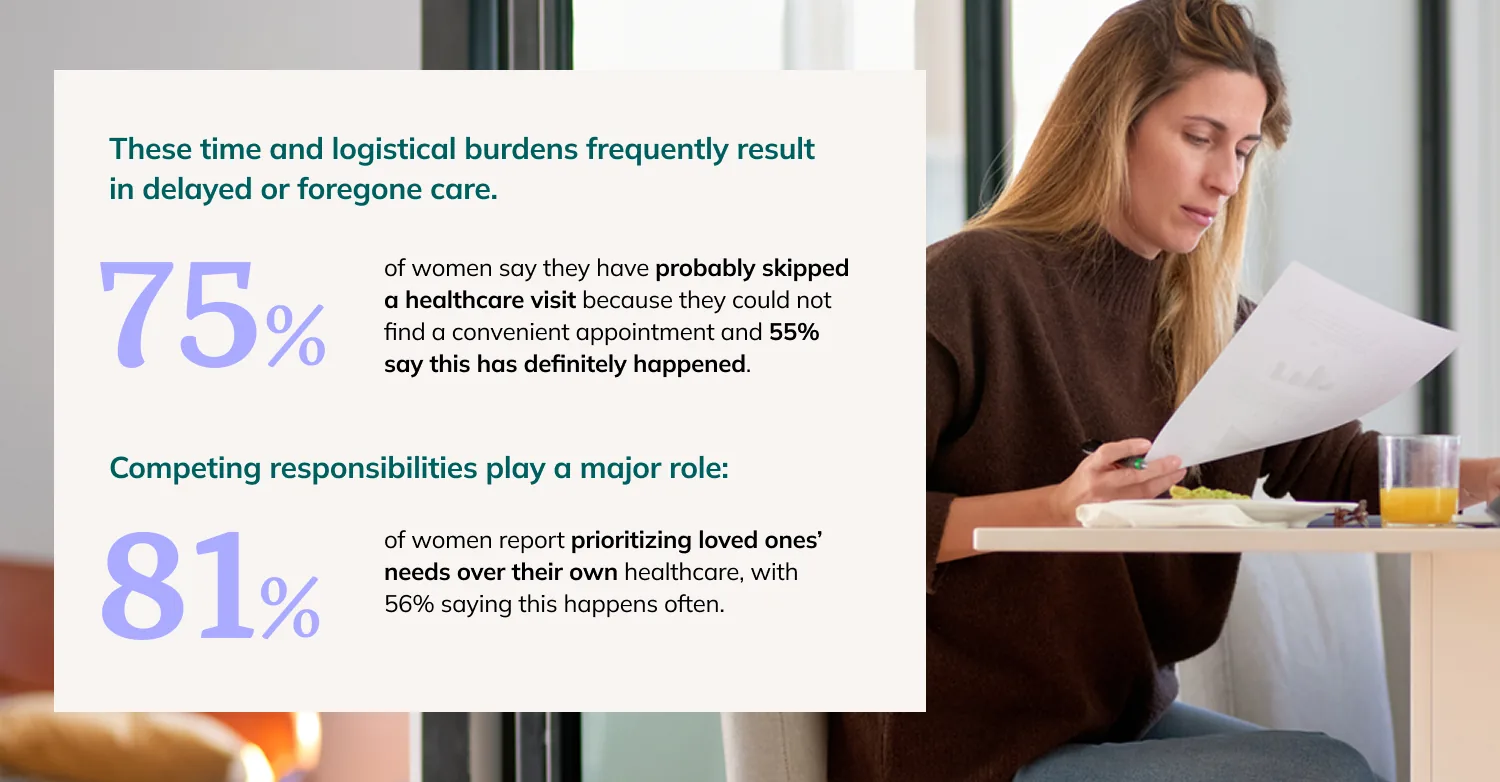
- The System Could Be Better: 81% of women regularly prioritize loved ones’ needs over their own health—because the system isn’t built for the realities of their lives.
- The Time Tax is Unacceptable: 75% say they’re likely to skip a healthcare visit entirely, driven by a burdensome “time tax.” 29% report that a primary care or OB-GYN appointment takes over three hours to complete.
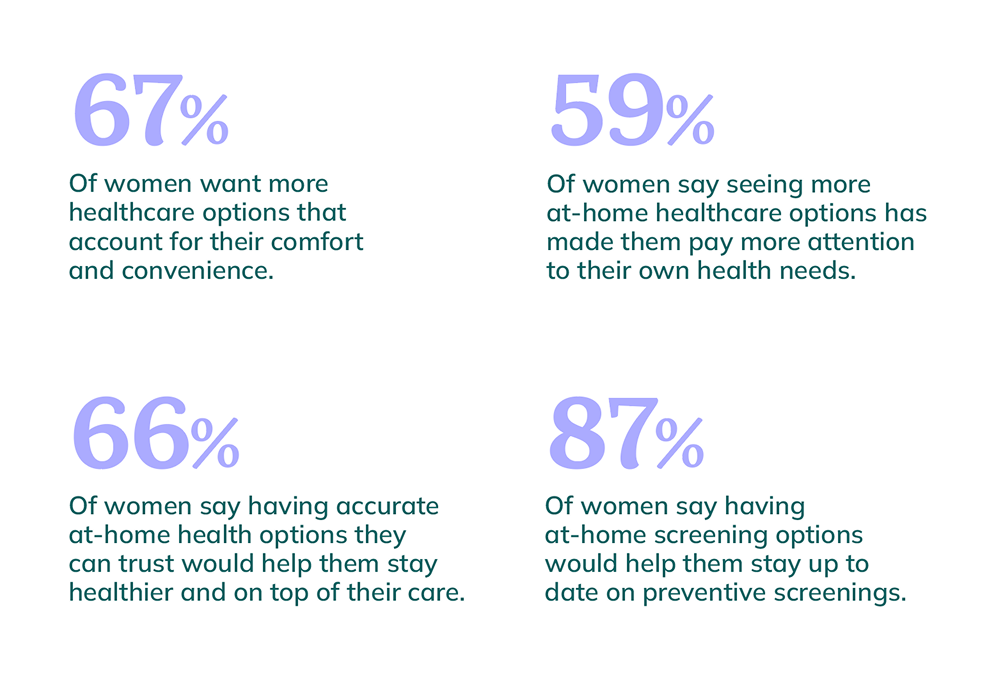
- Convenience is the New Standard: 87% say accurate, trusted at-home screening options would help them stay up to date on preventive care.
- Evolving Expertise is Non-Negotiable: 95% want providers who are forward-thinking and up to date on the latest clinically validated innovations.
- The New Influencers: 60% say their sources for health information have changed in the past 3–5 years, with 41% turning to social media influencers and 27% to AI platforms.
Most importantly, women are ready to shape what comes next.
They want healthcare grounded in compassion, respect, and true partnership, where they can be in control without having to figure everything out alone.
Their message is clear: healthcare innovation must listen, adapt, and share the load.
___________________
Dive into the data below
PART 1: Do Women Feel Like They Can Count on Today's Healthcare?
PART 2: Care on Women's Terms: Comfort, Convenience, and Choice
PART 3: Shifts in Trust and Influence
PART 4: A Healthcare Future with Women's Voices at the Center
PART 5: Survey Methodology and Demographics1
___________________
PART 1
Do Women Feel Like They Can Count on Today's Healthcare?
In short, not really. We could be doing so much better.

Women describe appointments that feel rushed, transactional, and dismissive; experiences that erode trust over time.
“Getting appointments, even for regular preventative care, is months and months out, which is frustrating”
In some care settings, the pressure to prioritize speed over connection can leave patients feeling like a statistic. This dynamic often restricts even the most well-intentioned providers.
“As clinicians, we want to know our patients, earn their trust, and give them clear answers. When women feel dismissed or rushed, that’s not a failure of caring—it’s a failure of the system we’re all working within. We owe women better.”
- Liz Swenson, MD, OBGYN, and Medical Director at Teal Health
Preventive healthcare as a priority
Preventive cancer screenings are an essential part of women’s healthcare, and women consistently view these screenings as a priority. Yet staying up to date can still be challenging. Finding time between school pick-ups, managing busy work schedules, or simply knowing when they are due for their next screening often makes it difficult to keep preventive care on track.
The top screening priorities most women reported were:
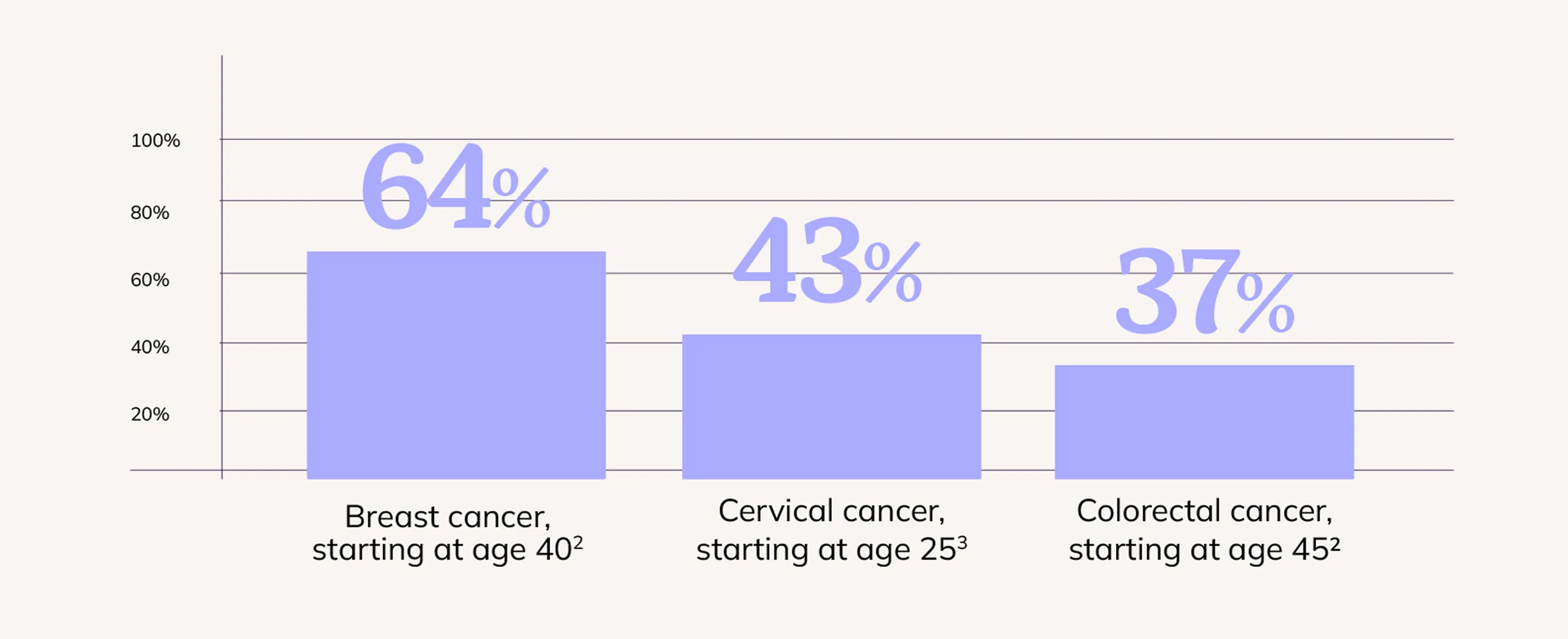
In addition to having to juggle preventive care on top of everything (and everyone) else they are responsible for, women are expected to piece together a complicated landscape of changing guidelines and information gaps.
Which screenings apply to me?
When should I start screening?
How often?
Does my family history have an impact?
How do I even get an appointment, or do I first need a referral?
Almost 38% are not entirely confident that they know which preventive screenings they should be getting.
What does it mean to balance life’s demands alongside healthcare?
Women fall behind on care as a direct consequence of a system that fails to acknowledge their competing demands. For most of them, these healthcare appointments are a logistical and emotional hurdle.
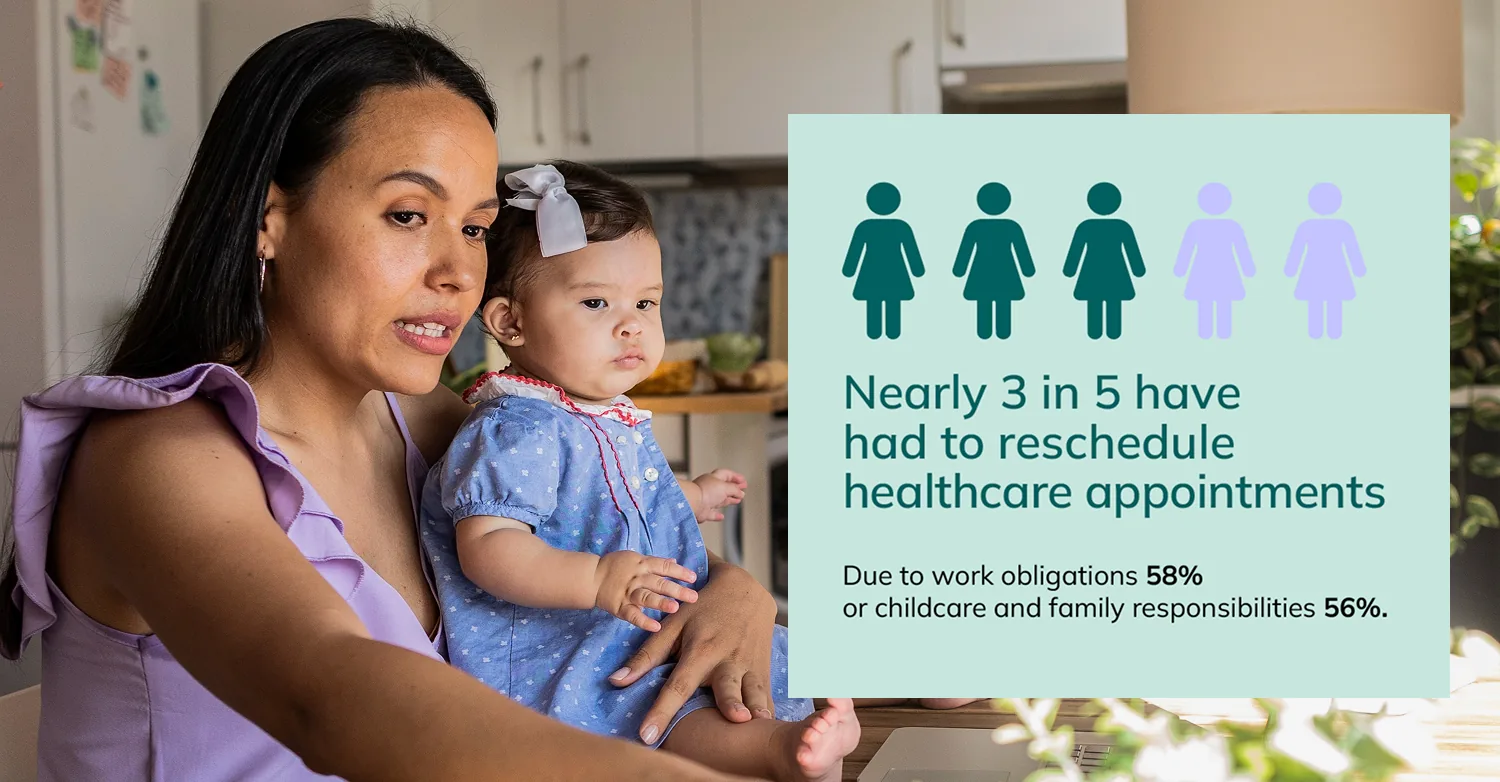
Once appointments are secured, they often require a significant time investment:

___________________
PART 2
Care on Women’s Terms: Comfort, Convenience, and Choice
Women are not asking for less care; they are asking for more support and flexible healthcare options that fit into their busy lives. They need the logistical burdens taken off their plates.

The Need for Innovation That Meets Her Where She Is
Women are looking for healthcare innovations that reflect the realities of their lives. Solutions that are accurate, trustworthy, and designed around comfort, flexibility, and convenience.
Telehealth adoption is widespread.
72% of women have reported using telehealth in the past, but say that current options need to go further by offering more personalized, high-touch support and truly accessible care.
As health technology accelerates, women expect providers to stay informed, open, and ready to offer modern options that expand choice without compromising accuracy or well-being. When healthcare meets women where they are—at home, between responsibilities, and on their own terms—engagement and follow-through improve.
Experts, Employers, and Insurers Who Get It
Women want their providers, employers, and insurers to actively support access to care that acknowledges their competing demands, time constraints, and caregiving responsibilities. At-home healthcare options are seen as a critical lever for reducing missed care and improving balance, but only if they are recommended, covered, and normalized across the healthcare ecosystem.
63% want employers to offer plans with more at-home healthcare solutions. When 58% are rescheduling healthcare appointments due to work conflicts, it is no surprise that at-home solutions can help strike a better balance.
67% also want their providers to recommend more at-home options, with almost everyone (95%) emphasizing that they want their doctor to be up-to-date and forward-thinking on the latest in healthcare innovations.
70% would use at-home healthcare options to stay healthy if their insurance providers covered these.
“Women are making real efforts to stay healthy, often while balancing work, family, and caregiving,”
Liz Swenson, MD, OBGYN, and Medical Director at Teal Health
“When accurate at-home options are paired with supportive telehealth and digital tools, they can offer genuine access to care that leads to better outcomes. Aligning providers, employers, and insurers around these solutions helps ensure care is not only available, but practical, trusted, and designed to fit into women’s everyday lives.”
___________________
PART 3
Shifts in Trust and Influence
With challenges to accessing traditional healthcare services, women are turning to new sources for information. While medical providers and healthcare organizations continue to play an important role, we also see the rise of women searching AI platforms at the same time as turning to their trusted loved ones for health information.
60% of women report that their sources for healthcare information have changed in the past 3 to 5 years.
Medical providers and healthcare organizations remain trusted sources for health recommendations (68%) and medical advice (47%), but we are also seeing changes in where and how women are choosing to receive their healthcare information:


___________________
PART 4
A Healthcare Future with Women’s Voices at the Center
Women are no longer willing to have their health whispered about behind closed doors. They are ready to speak, ready to be heard, and ready for new options. The only ones still treating women’s health as “taboo” are outdated voices clinging to old narratives.

The Power of Word-of-Mouth: We see women taking the lead on this cultural shift, breaking down the stigma that has clouded the women’s health space as they find themselves having more of these conversations in their daily lives:
2 in 3 (67%) women have used, or would use, a health technology product or service that was recommended to them by a loved one.
Over 2 in 3 (68%) say they have had more conversations with loved ones around women’s health topics, products, and services in the past 5 years.

The Ideal Healthcare Experience, According to Women:
- Respect & Compassion: Being listened to, taken seriously, and treated with respect.
- Access on Their Terms: Timely, affordable, and convenient care that works with their schedules.
- Partnership: Clear communication, personalized care, and shared decision-making alongside their providers.
___________________
PART 5
Survey Methodology and Demographics
Teal Health utilized an online survey of 516 women from across the United States, targeting those between the ages of 25-65. The survey was active between October and November 2025, and had a 93% completion rate among the 516 respondents (no compensation provided). Teal relied on a survey partner (SurveyMonkey) to source responses in order to reduce bias, widen the sampling pool, and ensure representation across geographies, age, education level, income, and other demographic categories. Demographic data highlights are presented below (these questions were not required, and some categories did not receive sufficient responses to report). Analysis relied on descriptive statistics and inductive qualitative coding.
Key demographic highlights:
- 42 of the 50 U.S. states were represented.
- 53% are millennials aged 29-44 years (n=251)
- 22% (n=105) consider themselves perimenopausal, while 17% (n=83) report they are postmenopausal.
- 68% (n=325) have a partner or are married
- 73% are mothers (n=270), while 37% (n=177) also provide care for adult dependents.
- 60% work full-time (n=290), while 11% (n=51) hold part-time employment, with the remainder ranging in work status, including being unemployed, disabled, full-time homemakers, or retired.
- 44% (n=212) are insured via Medicare or Medicaid, while 32% (n=153) are on private insurance (e.g., HMO, PPO, employer-supported), and 15% (n=71) are insured through the Affordable Care Act (Obamacare)
- Annual household incomes range from less than $25,000 (21%, n=102) to over $200,000 (13%, n=61), with representation across all income levels in between.
- Most respondents hold a bachelor's degree or higher (57%, n=275), while 20% (n=98) have less than a high school diploma or GED, and 10% (n=48) have some college education but no degree.
____________
To learn more about the State of Her Health Report and delve into our data, download our Data Report.
___________________
Want to share your thoughts on this data or our report? We would love to hear from you. To share your thoughts, please reach out to us.
Sources:
1 Survey Methodology (see above)
2 Current guidelines for those at average risk per the U.S. Preventive Services Task Force
3 Guidelines vary depending on the type of test used for screening. With Pap smear (cytology) alone, screening can begin at age 21, per the U.S. Preventive Services Task Force. Primary HPV or co-testing is recommended for those 25 years and older per the American Cancer Society.